Schematics done, board laid out, checked, ordered. That last step is the milestone, because once a board is at the fab the design is locked. Not a working board yet. A design we can no longer change.
For weeks the pod existed only as files. A schematic. A board layout. A power budget in CAD. Files don't push back. You can move a trace, swap a part, or change your mind at 1am, and nothing is ever final. So at some point you have to stop.
So we stopped. Schematics finished, layout finished, checks run, board ordered.
Once a board goes to the fab, the design is out of your hands and turning into copper at a factory. Every assumption is baked in. A wrong footprint, a tight clearance, a part rotated the wrong way: you find that out in two weeks, not two minutes. So before ordering we did the boring part. We checked the whole board against the known ways a design like this fails. Antenna keepout and clearance for the radio. The switching regulator, which can degrade a radio if it's placed wrong. The debug header you don't think about until the board won't program. Kai reviewed the layout before we committed. None of it is exciting. All of it is cheaper than ordering a second board.
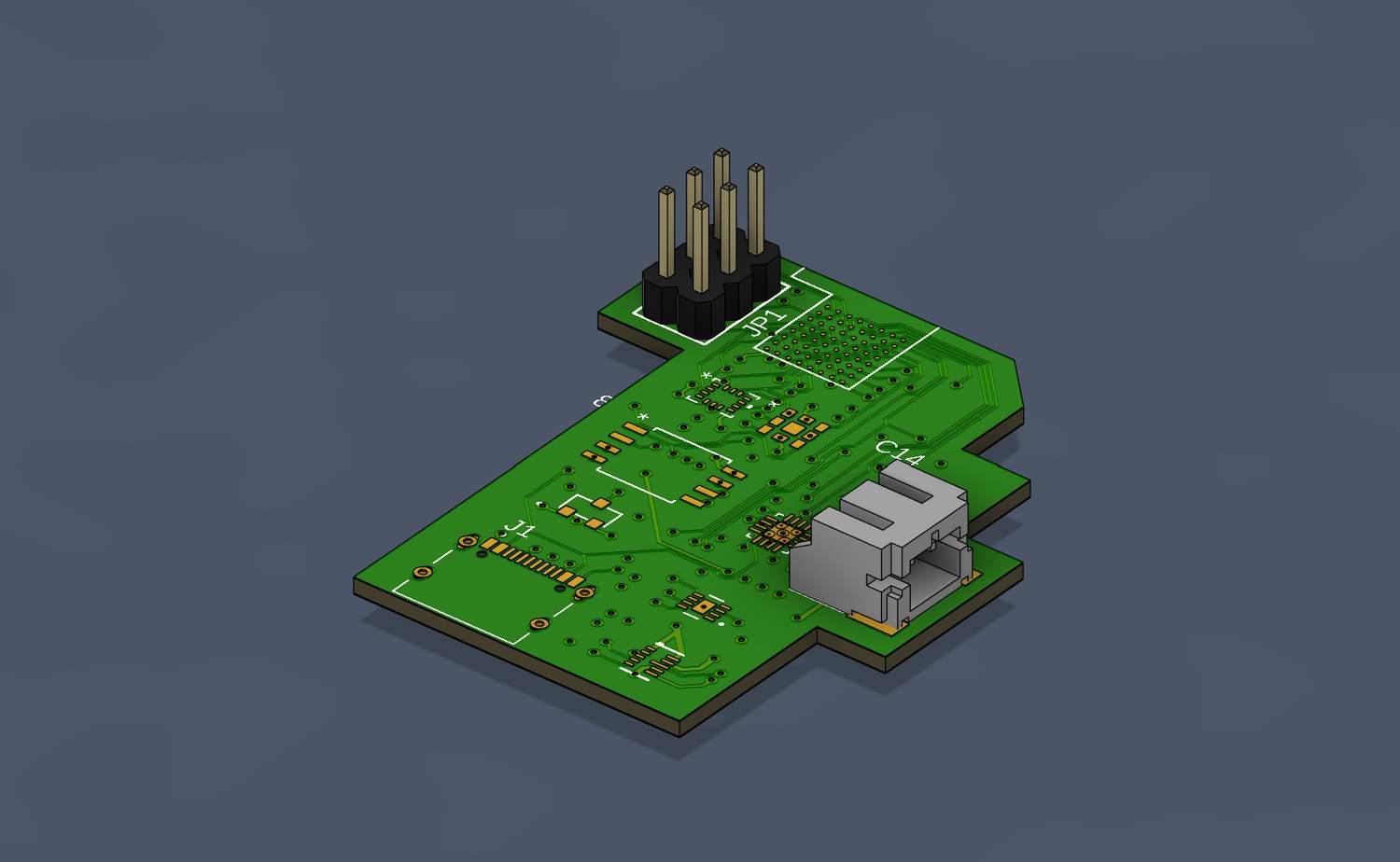
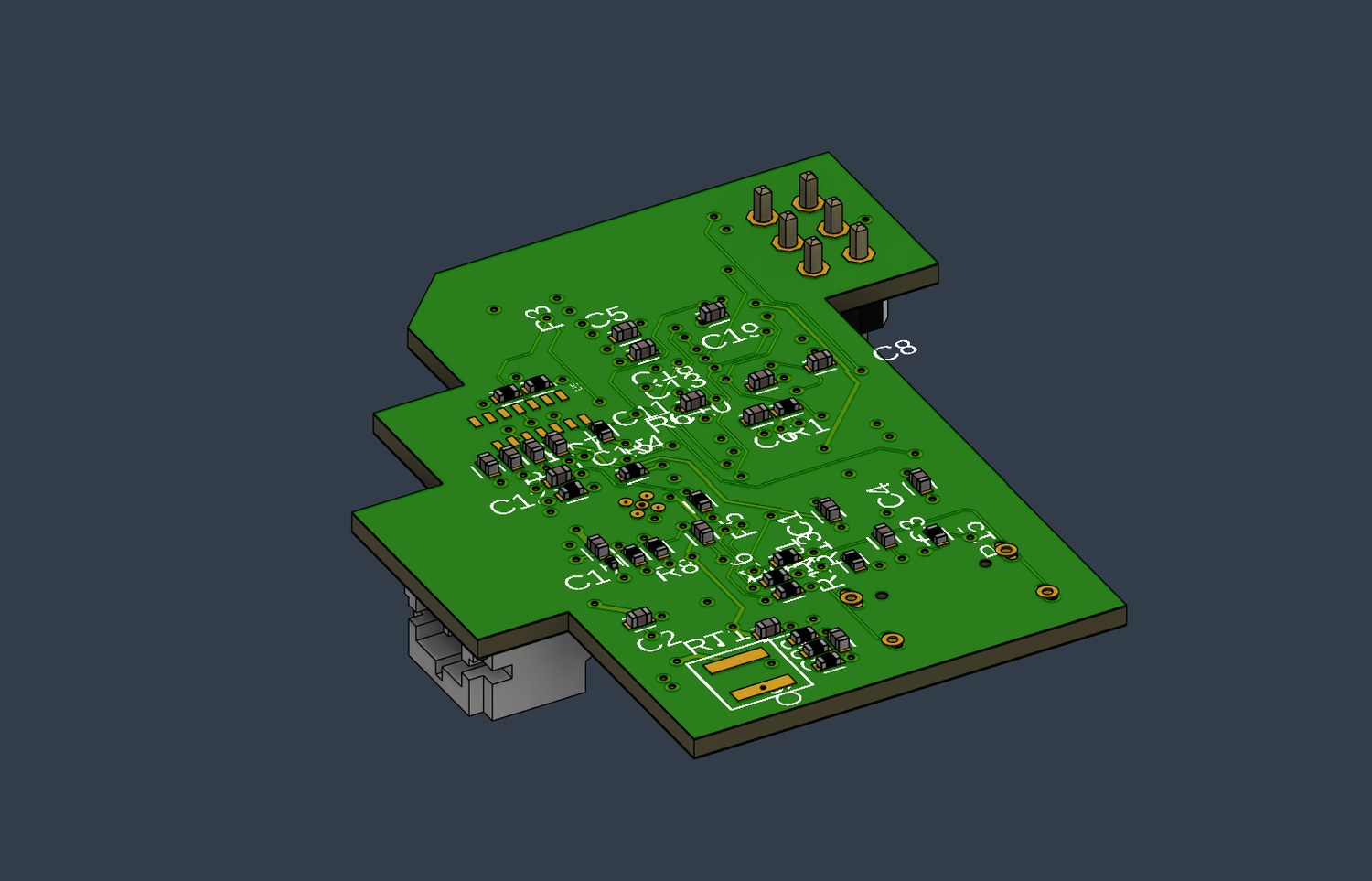
Now we wait. The board is somewhere between the factory and our bench. While it ships, the rest of the pod is coming together. We picked the compression sleeves the pod rides in on a real arm and ordered them. And we started modeling the casing in 3D: the shell that holds the board, takes a hit on a gym floor, and sits in the sleeve pocket without digging into a player's arm.
What we already know we'll change on V2
We already have a list of what the second board changes, and we're writing it down before the first one is even back. That's normal in hardware. Most of what you learn comes from designing the board, and we learned plenty designing this one. Every constraint we fought is a note for V2. We have a lot of notes.
Placement. The pod is smaller than a matchbook, and every component wants the same few square centimeters. On V1 we placed parts one at a time and made it fit. V2 starts from a floor plan. We lock the placements that are hardest to move first, then build the rest around them, instead of fighting for space at the end.
Better parts for the same job. Designing through a real supply chain teaches you fast that the part you want and the part you can actually buy are not always the same. We swapped a component mid-design when our first choice went out of stock. It worked, but availability made that call, not fit. V2 chooses parts knowing exactly what each one has to do, not just what's in stock that week.
Cleaner routing. A small board carrying a radio, a switching regulator, and analog sensors is a hard routing problem. Little room, a lot of signals, and a ground that has to stay clean or the radio degrades. V1 made real compromises to fit everything. V2 gives the routing more room, which means a quieter board for both the radio and the sensors.
Fewer filled vias. V1 has a lot of vias, and several of them sit right under resistors and caps. That's a problem at assembly, because solder wants to flow down an open via instead of forming a clean joint under the part. Our fix on V1 was to have the fab fill those vias with resin and cap them, so the pad stays flat and the solder stays put. It works, but filled and capped vias cost more and add a fab step. V2 gives the layout more room so fewer vias sit under components, which lets us drop most of the filled vias and take the cost and the extra work out with them.
A better shape. The board has to fit a body, not just function. A pod on the upper arm through a full session can't have a corner digging in. V1's outline came after the parts: get everything on, shape it later. V2 designs the outline to the arm and the sleeve pocket from the start, so the board fits the casing by design.
None of this means V1 was wrong. V1 exists to prove the basic loop: capture a session, log it, score it, report it. We only know how to design V2 because designing V1 showed us what matters.
Honest status. Schematics done. PCB designed and ordered, board in transit. Sleeves picked and ordered. Casing in 3D. The first board is still on its way, and the second one already has a head start. Bring-up is next. That's when we power it on and find out whether the design we just locked holds. Something here is wrong and we don't know what yet. We'll tell you when we do.